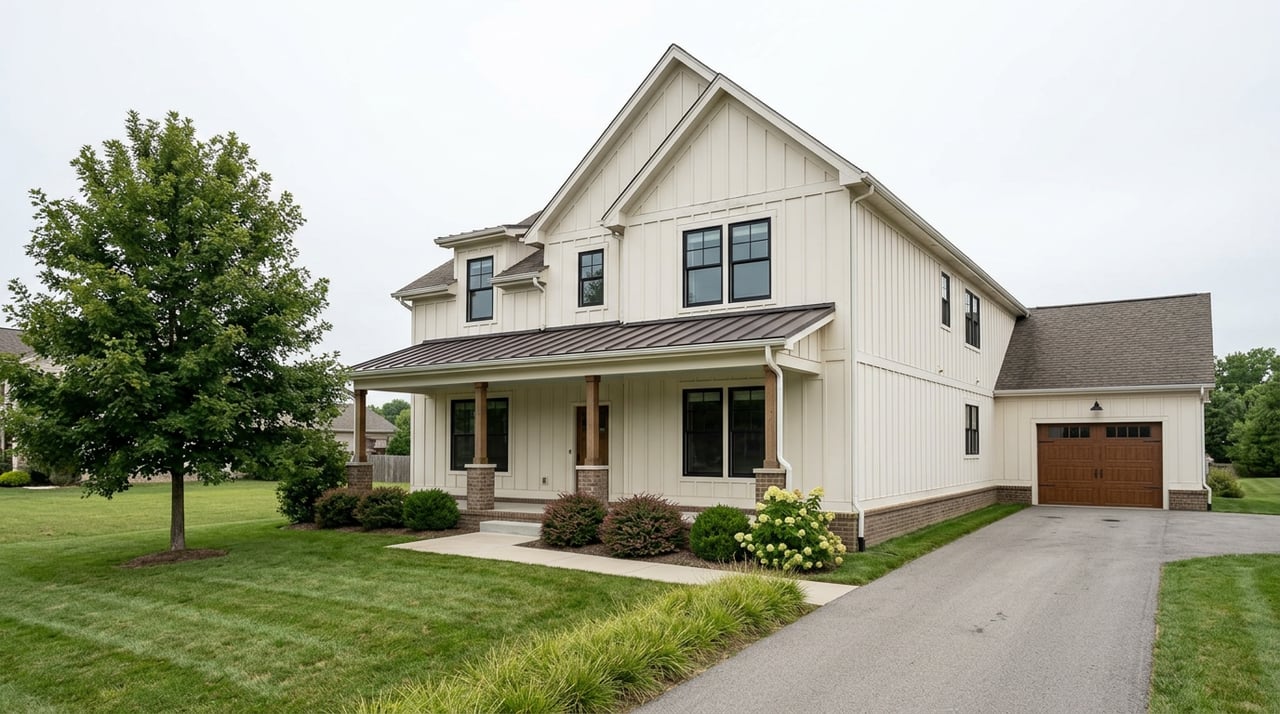
The inspection goes fine. The buyer's happy, the seller's relieved, and everyone starts picking a closing date. Then, a week or two later, the lender asks for proof of homeowners insurance, and the buyer's agent gets a call back that nobody wanted: the carrier won't bind a policy until someone looks at the wiring. The house didn't fail anything. It just ran into an underwriter instead of an inspector, and by then the contract is already moving toward a date on the calendar.
This isn't rare in New Castle. It's close to routine, and the reason has less to do with any one house and more to do with when this city was built.
The math behind why this keeps happening here
New Castle's median home construction year sits at 1956, according to Census-based estimates. Roughly 28 percent of the city's homes were built before 1940, with another chunk going up during that decade, putting close to four in ten homes here at least three-quarters of a century old. That's the headline number people quote. It's not the useful one.
The useful number is what happened to wiring in two specific windows that New Castle's housing stock straddles almost exactly. Homes built before 1940 commonly used knob-and-tube wiring, an ungrounded system of ceramic knobs and tubes that was standard practice for decades and isn't automatically dangerous when properly installed and undisturbed, but is treated as a red flag by most insurance carriers regardless of condition. Homes built roughly between 1960 and 1980 often used aluminum branch circuit wiring instead of copper, which is less durable and tends to age and deteriorate at connections faster, and is the other wiring type insurers price up or decline outright.
A city with a median build year of 1956 isn't clustered around one risk. It's straddling both of them. A home built in the 1930s might still carry active knob-and-tube in a back bedroom nobody's touched since the Eisenhower administration. A home built in the 1960s or 70s, which describes a large share of New Castle's post-war growth, may have gone up with aluminum wiring as standard practice at the time. Neither is visible from the street, and neither shows up on a listing sheet.
Same city, two very different wiring stories
New Castle's oldest housing sits downtown, around Broad Street and Courthouse Square, among the city's original residential blocks. Newer pockets, particularly around Baker Park and Osborne Park on the south side, trend toward mid-century and later construction. The VA Loan Network guide puts it plainly: older housing near Broad Street can be a strong value, but inspecting the utilities and electrical panel early matters more there than in the newer pockets, since well-maintained wiring tends to reduce appraisal conditions under VA Minimum Property Requirements.
That's not a knock on downtown New Castle. It's a map. If you're buying or selling in the Broad Street corridor, knob-and-tube is the wiring story to plan around. If you're closer to Baker Park or Osborne Park, aluminum branch wiring from the 60s and 70s is more likely the one that matters. Henry County REMC, the electric cooperative that serves most of the area, maintains inspection fact sheets by jurisdiction precisely because the answer to "what's in the walls" depends on where in the county you're standing.
What Indiana actually requires a seller to say
Indiana law requires anyone selling a one-to-four-unit residential property to complete the Seller's Residential Real Estate Sales Disclosure, State Form 46234, before accepting an offer, under Indiana Code 32-21-5-10(a). Quadwalls describes the electrical section of that form as asking the seller to mark each major component as None or Not Included, Not Defective, Defective, or Do Not Know, and to note the age if known.
That last option, Do Not Know, is where the friction usually starts. A seller who has lived in a house for twenty years and never had a problem often marks the electrical section as Not Defective in good faith, because nothing has ever tripped, sparked, or failed. The form isn't asking whether the system has caused trouble. It's asking about its actual condition, which most sellers can't answer with confidence unless someone qualified has actually looked at the wiring type and connections.
That gap between what a seller believes and what an electrician would find is exactly where a sale stalls. The disclosure form gets filled out honestly but incompletely, the inspection doesn't always flag wiring material since identifying it isn't universally required in standard inspection scope, and the first person to actually name the wiring type out loud ends up being the insurance company, right around the time the lender is asking for a binder.
Where the timing actually bites
Here's the part that catches people off guard: none of this is really about safety in the way people assume. Properly installed knob-and-tube that hasn't been buried in insulation or spliced into modern circuits isn't inherently a fire hazard. The problem is underwriting, not danger. Many carriers decline to write a new policy on a home with active knob-and-tube at all, and those that will typically charge more and want a licensed electrician's inspection report first. Aluminum wiring gets similar treatment: some carriers ask for the wiring to be inspected and corrected by a licensed electrician before they will bind, and homeowners who replace aluminum circuits with copper often see their premium settle back down.
According to iBuyer.com, VA and FHA loans add another layer, since both carry minimum property standards that expect a safe, functioning electrical system before the loan can close. As iBuyer.com explains, a buyer who can't get a homeowners policy in place can't close a financed purchase, full stop, regardless of how clean the rest of the transaction looks.
None of this typically surfaces at the inspection table. It surfaces when the buyer's lender asks for proof of insurance, which is often the last document requested before closing, not the first. That's why a sale that looked finished two weeks earlier can suddenly need an electrician on short notice, a remediation estimate, and a new closing date, all because nobody named the wiring type out loud until an underwriter did.
| Build era | What's commonly found | What it triggers at closing |
|---|---|---|
| Before 1940 | Knob-and-tube wiring, no ground | Many carriers decline coverage or require an electrician's report before binding |
| Roughly 1960 to 1980 | Aluminum branch circuit wiring | Higher premiums or a request to have the wiring inspected and corrected |
| After 1980 | Copper, grounded circuits | Standard underwriting, no special conditions |
A sequence that avoids the surprise
The fix isn't complicated, but it has to happen in the right order.
- Get a licensed electrician's inspection before listing, not after an offer is already on the table.
- Ask for a written report that identifies the wiring material, the panel's amperage, and whether any active knob-and-tube or aluminum circuits are still in use.
- Decide, with real numbers in hand, whether to remediate before listing or price the home to reflect what a buyer will likely spend.
- Complete the state disclosure form from that report instead of memory or assumption.
- Share that report with the buyer's lender or insurance agent early, before the binder deadline turns it into an emergency.
This is where a contractor's eye actually changes the outcome instead of just describing the problem after the fact. Mike McKown holds an Indiana general and electrical contractor license, so when the team walks an older New Castle listing, the wiring question gets asked and answered before it becomes a phone call the week of closing.
FAQ
Does a New Castle home built in the 1950s automatically have a wiring problem? No. A house built exactly in 1956 could have original copper wiring, or it could have been rewired in the 1970s with aluminum, or never rewired at all. The build year tells you which risk window to check, not which wiring is actually in the walls.
Do I have to rewire the whole house to sell it? Not necessarily. Some insurers will bind a policy on a home with aluminum wiring once a licensed electrician has inspected and corrected the connections, which is a smaller job than a full rewire. Active knob-and-tube is treated more strictly, but even there, some carriers will insure it once a licensed electrician's report confirms its condition.
Won't the home inspector catch this for me? Sometimes, but not always. Identifying the specific wiring material isn't a universal requirement of a standard home inspection, so sellers who wait for the inspection report to settle the question can end up finding out from an insurance underwriter instead, later in the process than anyone would like.
If you're weighing a sale on an older New Castle home, or trying to figure out what a listing near Broad Street versus Baker Park actually means for financing, The McKown Team can walk the wiring question with you before it becomes someone else's timeline. Contact us.
This article is general information, not legal, tax or financial advice. Consult a qualified professional about your situation.