Walk into Millies on Main on a Friday night and you will notice the room before you notice the menu. It reads dark and deliberate, more low country than Indiana, the kind of space that makes a Tuesday dinner feel like an occasion without announcing itself. What you probably will not notice, unless someone tells you, is that the walls around you have been doing this same trick for over a century. They just keep changing what the trick is.
That building on Main Street has been a dry goods store, a federal post office, a furniture showroom, a restaurant, and a cigar bar. Now it is Millies on Main, which opened for dinner service on June 26, 2026. The building did not get preserved so much as it got handed a new job, again. That pattern is the actual story of downtown Anderson right now, and once you see it, you start noticing it on almost every block between Meridian and Main.
A Building That Keeps Changing Its Mind
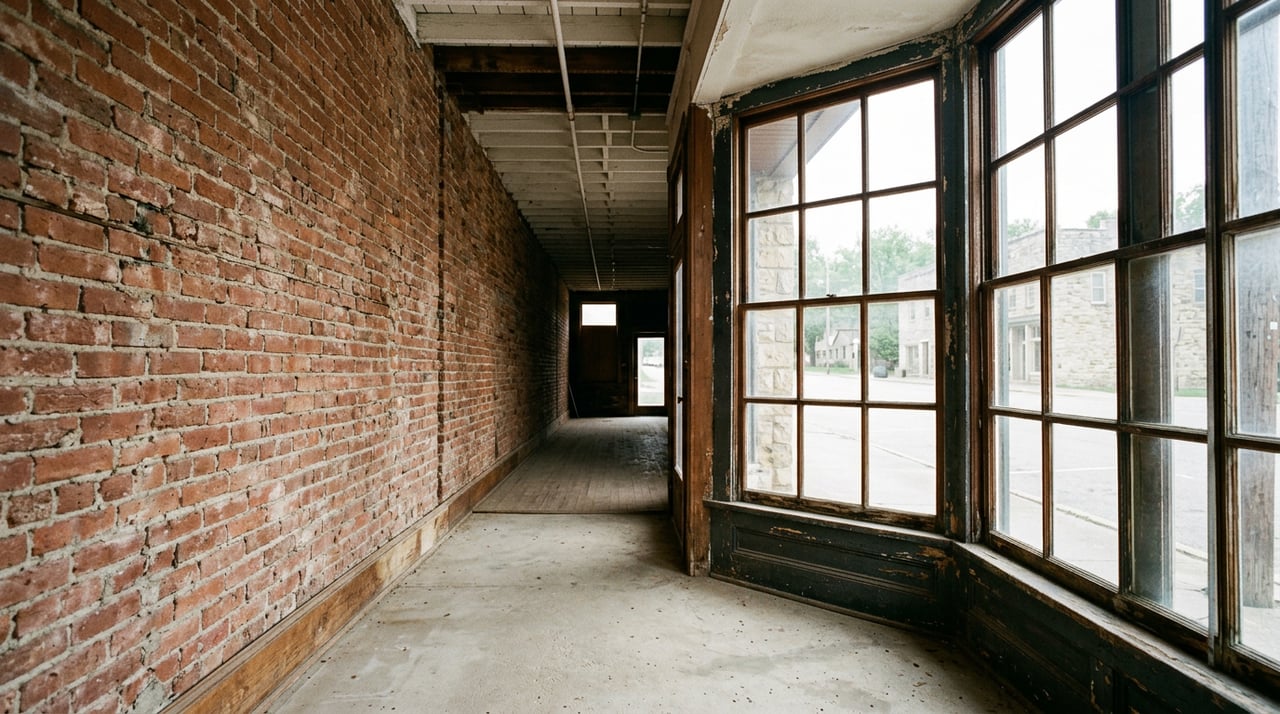
The space Millies on Main occupies has carried a lot of names. Around the turn of the last century it was the Red Hot Racket Store. In the 1940s it worked as a postal office. From the 1950s until 2001 it ran as a furniture store. In the early 2000s it became Matty's Downtown Restaurant, and after that a cigar bar. Operating partner Casey Metz and chef Shane White are the latest people to bet on the space, and they are doing it with a Southern-leaning menu built around dishes like shrimp and grits, running under exposed old beams that still hint at every previous life the room has lived.
Metz and White did not go looking for a blank slate. They knew the building's owner and had worked with people connected to the space before, which is how a lot of downtown Anderson deals still get made. The plan is to grow the concept past dinner service into live music, comedy nights, bingo and trivia, once the kitchen has its rhythm down. White has said he wants the dining room to prove itself first before the venue side takes over, which tells you something about how careful these reuse projects have to be. A building can absorb a new identity. It cannot absorb a bad first year.
The buildings downtown were never really preserved as museum pieces. They were kept because someone kept finding a new use for them.
The District That Makes This Possible
None of this is an accident of one ambitious restaurant owner. Downtown Anderson's commercial core is a federally recognized historic district, and the district's own definition is built around reuse rather than freeze-frame preservation. It covers roughly 32 contributing buildings dating from about 1887 to 1955, and it exists specifically because that collection of commercial buildings kept its architectural character even as the businesses inside them turned over decade after decade. Individually listed sites within or near the district include the Paramount Theatre, the Tower Hotel, the Anderson Bank Building, the Gruenewald House, and the Anderson Center for the Arts.
That is the quiet logic behind Millies on Main's building history. A dry goods store becomes a post office becomes a furniture store becomes a restaurant not because anyone planned a theme, but because the bones of these buildings, the brick, the ceiling height, the street-facing storefronts, keep accepting new tenants without asking them to change the architecture. Compare three of downtown's most talked-about spots and the pattern gets easy to see:
| Building | What it was | What it is now |
|---|---|---|
| Millies on Main space | Red Hot Racket Store, then a 1940s post office, then a furniture store through 2001, then a restaurant and cigar bar | Millies on Main, opened June 26, 2026 |
| City of Anderson Transit Center | Public transit facility | Ron Lahody's Steakhouse, a locally owned fine dining room with over 200 bourbon and whiskey selections |
| 1124 Meridian Street | Movie palace, opened 1929 | The Paramount Theatre, still a working movie palace and concert hall |
Two of those three buildings changed jobs completely. The third never did, and that is its own kind of story.
One Building That Never Changed Its Job
The Paramount Theatre opened in 1929 and has been doing the same thing, hosting live performances and film screenings under the same roof, for nearly a century. It still runs its original Page theatre organ for silent film screenings. While the buildings around it kept getting reassigned, the Paramount just kept being a theater, which makes its fall calendar worth paying attention to if you live close enough to walk there.
The lineup running through the end of the year includes:
- Etta May, winner of the American Comedy Award's Comic of the Year, on September 25
- Colin Mochrie and Brad Sherwood's improv show "Asking for Trouble" on October 15
- Alton Brown live on October 16
- IMomSoHard on October 17
- The Del McCoury Band on November 13
- The Purple Xperience, a Prince tribute, on November 14
- We Three Kings, an Irish dance Christmas show, on November 19
- Sandi Patty on December 5
That is a heavier run of national touring acts than a lot of towns this size get in a single season, and it lands within walking distance of a restaurant that did not exist a couple of months ago. The two facts are connected. A theater that never had to reinvent itself gives the rest of downtown a reliable reason to show up on a Friday night, which makes it easier for a new restaurant a block away to bet on foot traffic instead of destination dining.
The Rest of the Season Downtown Runs On
Downtown's other fixtures are running on their own separate clocks. The Anderson Farmers Market sets up weekly at the corner of 11th and Central, the same spot it has used in past seasons, with a mix of returning and new vendors. A few blocks over on Meridian Street, Creatures of Habit Brewing Co. and other small operators keep the weekday foot traffic moving even on nights the Paramount marquee is dark.
West Eighth Street, a separate historic district built during Anderson's 1880s gas boom, runs its own preservation calendar entirely apart from the Main Street commercial core. The West Eighth Street Neighborhood Association just wrapped this year's Gas Light Festival in August, a tradition the neighborhood association has hosted for more than two decades, complete with historic home tours and a weekend of block-level social events. It is a useful reminder that Anderson actually has two different historic districts working in parallel: one residential, built around Queen Anne and Neo-Classical homes from the gas boom era, and one commercial, built around the same 32 or so storefronts that keep getting handed new tenants.
What This Means If You Already Live Here
If you have lived downtown for a while, you have probably watched two or three storefronts change hands without thinking much about it. The useful shift is realizing that is not decline or churn. It is the same small stock of buildings doing what they were built to do, which is absorb whatever the current economy needs from them. A furniture store becomes a restaurant. A transit center becomes a steakhouse. The theater just keeps being a theater, and that consistency is what makes the churn around it feel stable instead of random.
Next time you walk past a storefront downtown with a new name in the window, it is worth a second look at the brick and the roofline. Odds are decent that building has done this before, under a name nobody currently living here remembers, and it will probably do it again.
For anyone thinking about what it actually means to own a piece of that history, or how a building's past life shapes its condition and its possibilities today, The McKown Team has spent years working through Henry County and East Central Indiana properties with exactly that kind of layered history. Contact us when you are ready to talk about what a building like that could still become.